KindLine TECH Safeguards Sinopec Hainan Crude Oil Commercial Reserve Base with Explosion-Proof Counter-UAV System
Integrated detection-and-spoofing defense deployed at a 2.55-million-cubic-meter national strategic
Project Background
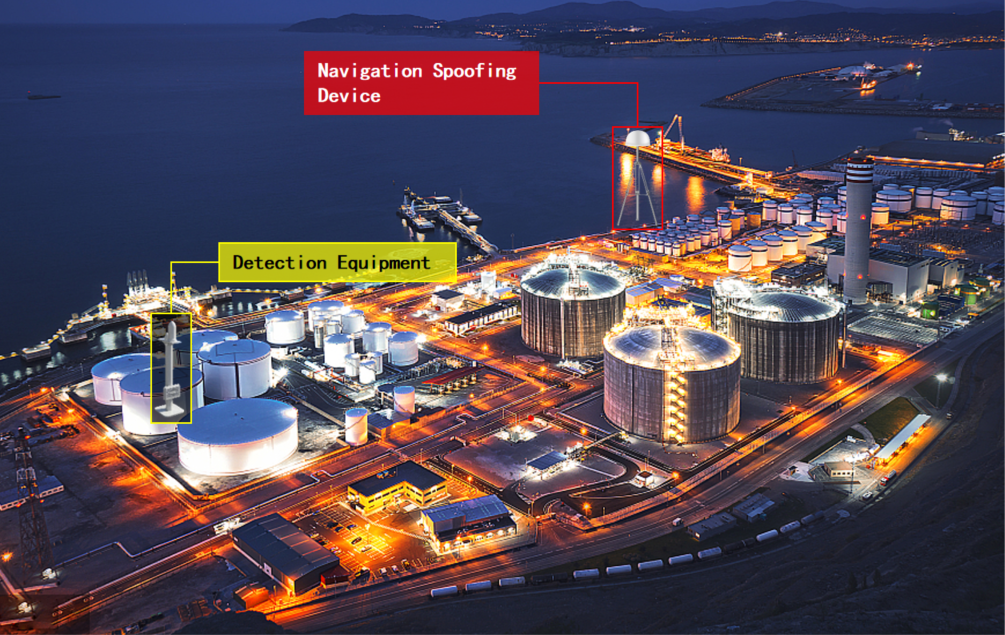
The Sinopec Hainan Crude Oil Commercial Reserve Base is a cornerstone of China's national strategic petroleum reserve network, with a storage capacity of 2.55 million cubic meters. It plays a critical role in ensuring crude oil supply security for South and Southwest China. The facility features densely packed large-scale storage tanks and an extensive pipeline corridor network, classifying it as a Tier-1 key target under the Ministry of Public Security's Anti-Terrorism Security Requirements for Petroleum and Petrochemical Systems—the highest security protection level.
In recent years, the declining cost and accessibility of drone technology have led to a rising frequency of unauthorized UAV incursions into petrochemical no-fly zones. For a crude oil reserve base, a single drone carrying hazardous materials approaching tank farms or transfer pipelines could have catastrophic consequences. Deploying a counter-UAV active defense system that meets explosion-proof requirements and operates autonomously around the clock has become an imperative for the base's security upgrade.
Solution Overview
KindLine TECH delivered an integrated detection-and-spoofing counter-UAV active defense system for the Sinopec Hainan base. To address the unique demands of the base's classified hazardous areas, the deployment features detection units with national-level explosion-proof certification (marking: Ex d[ia Ga]IIC T6 Gb / Ex tD A21 IP68 T80°C) and an ingress protection rating of IP68, ensuring long-term stable operation in high-temperature, high-humidity, and corrosive petrochemical environments.
The system operates on a two-stage principle: detection and early warning, followed by coordinated countermeasure activation. During the detection phase, passive TDOA spectrum monitoring units continuously receive drone video-transmission and flight-control signals across a frequency range of 100 MHz to 6 GHz, achieving a single-unit detection radius of 2–3 km. Because the units emit no electromagnetic radiation whatsoever, they produce zero interference with the base's DCS control systems, instrument timing devices, and other precision equipment. Upon identifying a non-cooperative UAV target entering the defense perimeter, the system immediately triggers audible and visual alerts to security personnel.
During the countermeasure phase, the GNSS spoofing unit activates automatically for a brief burst upon receiving a coordinated trigger, radiating counterfeit GPS/GLONASS navigation signals at a power not exceeding 10 mW to establish a low-altitude denial zone within 500–1,000 meters. The spoofed signals sever the unauthorized drone's satellite navigation link, causing it to lose positioning capability and execute either a return-to-home maneuver or a controlled forced landing, thereby neutralizing the intrusion safely.
Technical Highlights
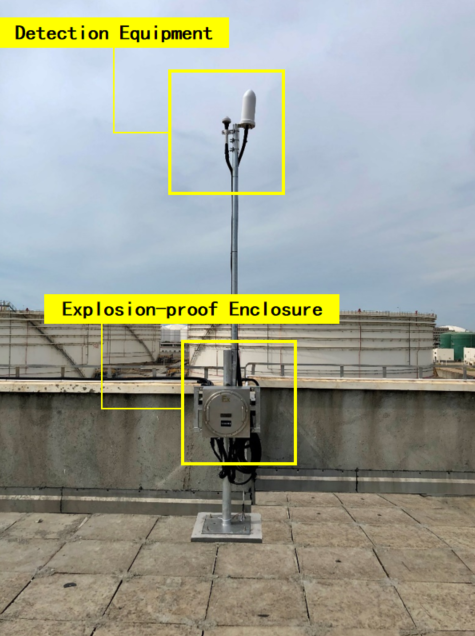
First, explosion-proof design meeting the highest petrochemical safety standards. The detection units feature reinforced explosion-proof enclosures certified by the National Center for Quality Supervision and Testing of Explosion-Proof Electrical Products, permitting safe deployment in IIC-class explosive gas atmospheres and combustible dust environments—resolving the longstanding challenge of installing electronic surveillance equipment in classified hazardous zones.
Second, intelligent coordination with fully autonomous operation. The system supports a complete automated workflow—from target detection and alert dispatch to spoofing activation—requiring no human intervention, achieving true 24/7 unmanned defense. A built-in whitelist/blacklist mechanism effectively distinguishes authorized operational drones from hostile intruders, preventing false engagements.
Third, micro-power compliant emission. Spoofing signal power is strictly limited to 10 mW or below, employing GNSS spoofing rather than broadband jamming. The equipment has passed certification testing by the State Radio Monitoring Center, guaranteeing zero electromagnetic interference to surrounding communication infrastructure and petrochemical instrumentation.
Project Outcomes
Since commissioning, the Sinopec Hainan Crude Oil Commercial Reserve Base has achieved continuous intelligent protection of low-altitude airspace over its tank farms and critical pipeline corridors. The explosion-proof detection units have operated reliably in Hainan's extreme heat and humidity, successfully detecting and repelling multiple unauthorized drone incursions approaching the defense perimeter. The system has effectively safeguarded national crude oil reserve security and established a proven reference model for counter-UAV deployments in explosion-proof petrochemical environments across the industry.


